
When the World Feels Like It's Falling Apart: Envision Higher, Trust Faithfully and Act Resolutely
Transcending doom and reawakening vision when the headlines dim our light.

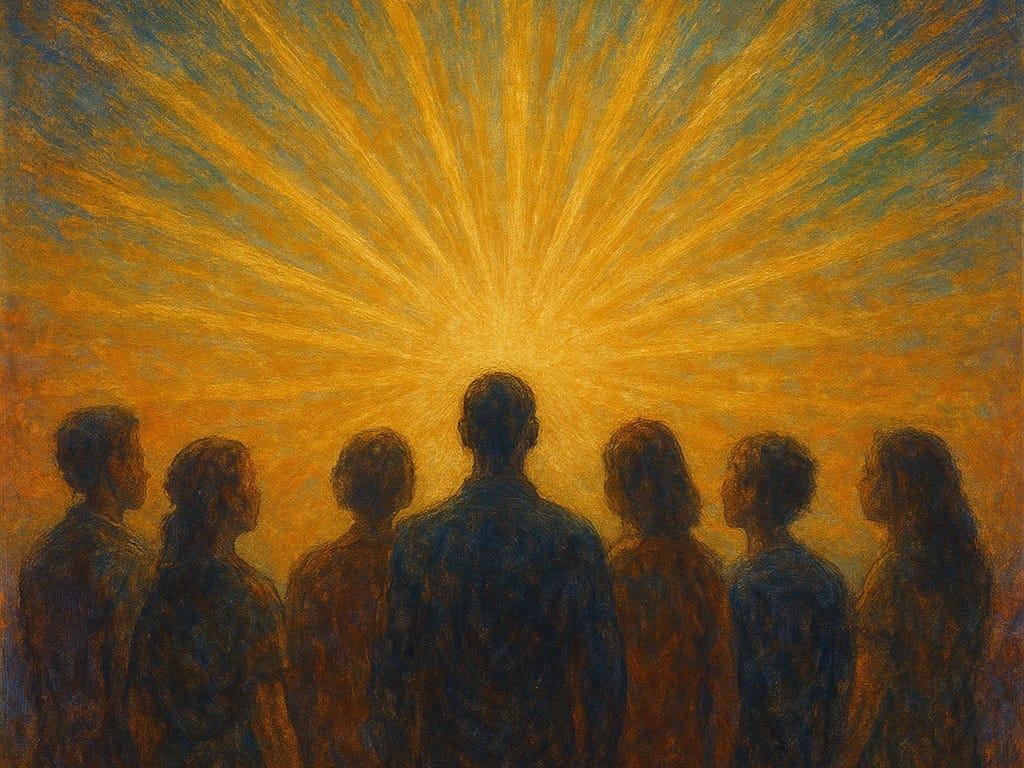
This post is inspired by a recent visit with a very dear friend. We found ourselves in a conversation about "current events" and I took us down a path to a dark place where I thought the signs of growing autocracy, tech-bros' plans for network states, and an impending WW3 would take us. She said, "Angelique, this isn't like you, you're scaring me!" I responded, "I know! I am the last person (always the optimist) I'd expect to be going 'there' but my mind goes there, because it rationally points the way, based on everything I know." I scared myself. I certainly did not want to go to the dark place, but I struggled to stop my mind rushing like a fast express train. I was surprised myself I was so avidly certain about it all. So, I vowed to stop my own madness and make best efforts to transcend to a higher gateway, beyond which greater illumination and hope resided.
The Trap of Smart Despair
It is often the most thoughtful among us—the ones who try to stay informed, read history, analyze deeply, and see patterns clearly—who fall most quickly into despair. This is not a weakness. It is a result of being awake. The sharper our perception, the easier it is to follow the trail of logic into dystopia. Negative thinking, born of pattern recognition, becomes "rational." And before we know it, a kind of paralyzed hopelessness sets in, cloaked in the garb of being informed, responsible, realistic.
But here’s the deeper truth: The mind, when left to its own devices without heart or soul, will always over-index on fear. It’s designed to protect, not to inspire. It scans for risk, not renewal. If we let it lead without tempering its calculations with benevolent open-mindedness, intuition and visionary imagination, we will always end up in a dark cul-de-sac.
And while that fear may be logical, it is not generative. It doesn't make us more capable. It shuts us down, closing the aperture through which creative vision, spiritual resilience, and inner knowing can flow.
When Knowing Too Much Becomes a Weight
For those who study history or geopolitics or planetary tipping points, the news feels less like a shock and more like a confirmation. And yet, even this confirmation can wound us. It can harden us. The psyche says, “We’ve seen this before,” and assumes the same collapse must repeat.
History can easily become a dark lens—a kind of fatalism masked as realism. But history is not prophecy. It's a caution and a possibility. And humans—when at their best—are full of surprise.
So we find ourselves at a threshold. One where we must hold two truths:
The danger is real.
Our response can still shape the future.
If we forget the second truth, we collapse. And our knowing becomes a weapon turned inward. When we forget our own agency, our sensitivity becomes a trap.
In times like these, the ability to dream becomes a radical act. It is easy to be clever. It is harder to be courageous. The work now is to become stewards of a new possibility, without bypassing what is broken.
When Inspiration Made New History
But the power of courageous vision is not theoretical—it is historical. Again and again, we have seen people meet despair with possibility and shift the tides.
Consider Gandhi, who faced down the British Empire not through violence, but with soul-force—Satyagraha—and inspired global movements for liberation.
Take Chile, for example. In 1988, after years of brutal dictatorship under Augusto Pinochet, a peaceful, joyful campaign called the 'No' campaign helped end his rule through a democratic vote. Artists, laborers, mothers, and youth used creativity and song—not fear or hate—to reclaim their country's future.
Or consider the Baltic Way in 1989, when two million people across Estonia, Latvia, and Lithuania joined hands to form a 600-kilometer human chain in a peaceful demonstration of unity.
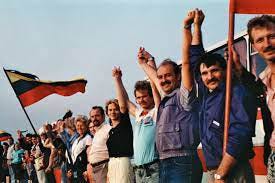
It became a turning point in their journey toward independence from the Soviet Union.
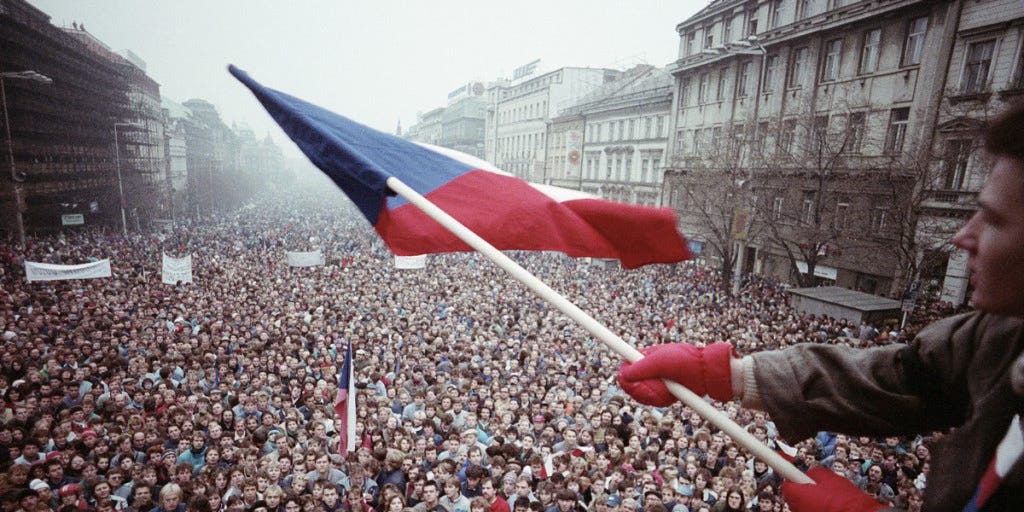
Václav Havel, playwright turned president, wrote from prison about the power of "living in truth" under totalitarianism—before eventually helping to dissolve a regime. His leadership in Czechoslovakia's peaceful Velvet Revolution in 1989 helped end four decades of communist rule and usher in a democratic government without a single shot fired. The people took to the streets, armed not with weapons but with songs, candles, and the dream of freedom—and they won.
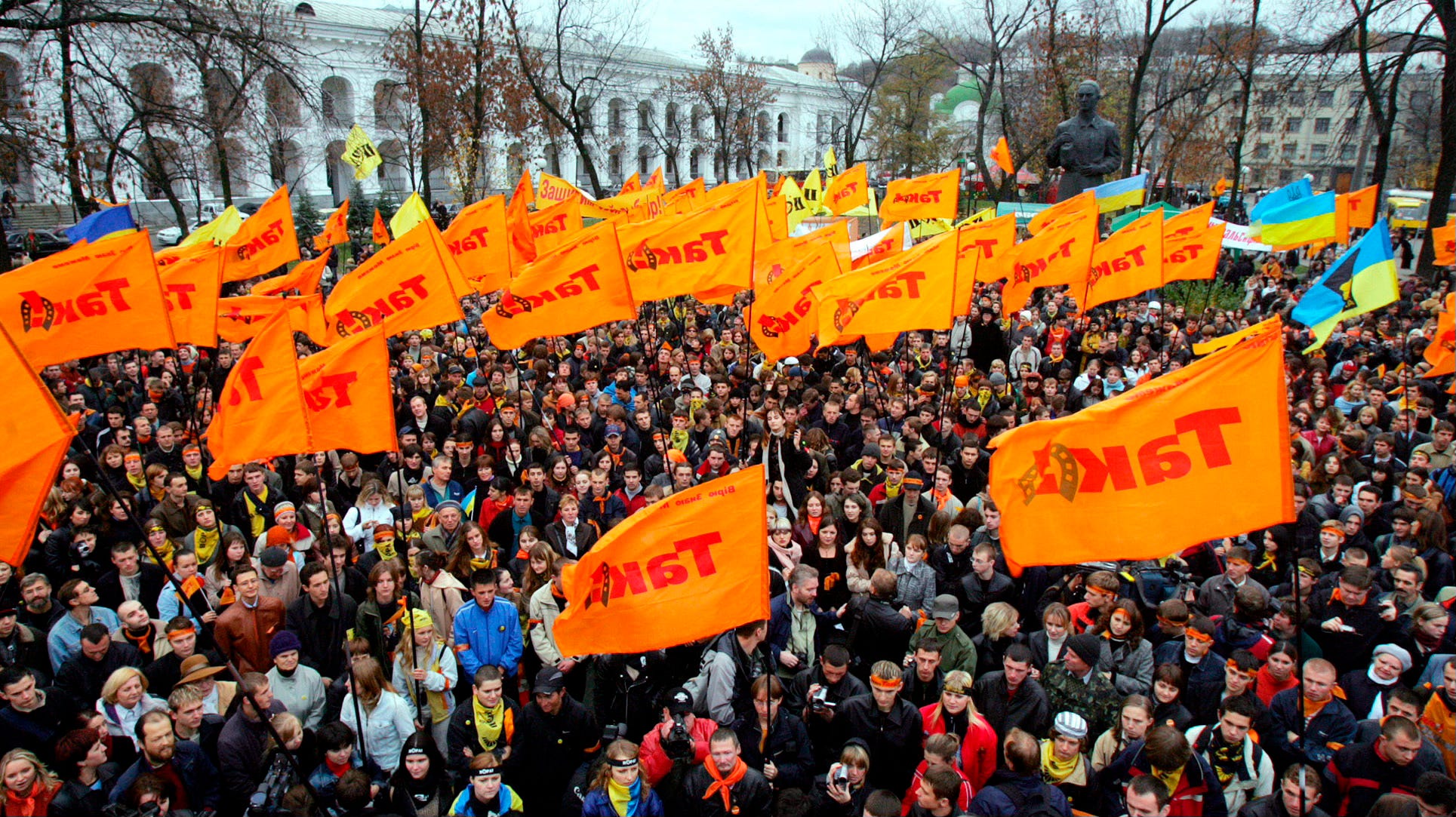
Ukraine’s Orange Revolution in 2004 is another profound example. When election results were manipulated, people flooded the streets in the middle of winter. Their sustained, nonviolent resistance led to a new, free election and signaled to the world that even entrenched systems of power can be challenged when the will of the people is clear, organized, and full of soul.
In post-apartheid South Africa, the Truth and Reconciliation Commission chose storytelling, acknowledgment, and restorative justice over vengeance.
Consider Dr. Martin Luther King Jr.’s "I Have a Dream" speech, offered in the face of brutal segregation and state violence. He dared to cast a vision higher than the facts that galvanized a movement. Also consider the many civil rights protests that led to the Civil Rights Act of 1964.

More recently, Malala Yousafzai, wounded by an act of terrorism, turned trauma into global advocacy for girls’ education. She transformed pain into possibility—not by bypassing reality, but by anchoring in hope.

And consider Barack Obama's 2008 presidential campaign—a movement fueled not by cynicism but by a call to collective idealism. The slogan "Hope and Change" was not mere marketing; it became a vessel through which millions of Americans, especially young people and marginalized communities, poured their desire for a more inclusive, visionary future.
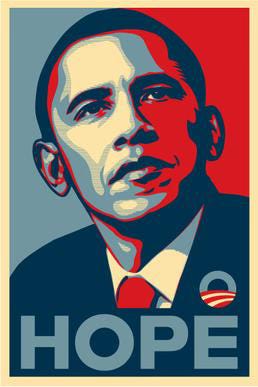
Barack Obama/By Shepard Fairey, 2008 National Portrait Gallery, Smithsonian Institution
While the journey was imperfect, the wave of civic engagement, intercultural coalition-building, and belief in possibility that it awakened left a lasting impact on the American psyche and political imagination. It was a reminder that when people are invited to believe in something greater than their fear—something rooted in shared dignity and potential—they often rise to meet it. That kind of inspired momentum doesn't have to be rare. It can be rekindled in any era, through any one of us, when we decide to lead from the clarity of conscience and the fullness of heart.
In each of these examples, what prevailed was not brute force but brave vision. What led the change was not despair, but the dignity of people who dared to imagine something better—and act on it together.
And we cannot forget the founding of America itself—however imperfect and exclusionary in its execution, it was seeded with radically aspirational ideals: liberty, equality, and government by the people. While the full embodiment of these values remains unfinished, the vision that sparked a revolution still reverberates, inviting each generation to carry it forward, refined by greater inclusion, deeper compassion, and courageous action.
The Inner Pivot: From Analysis to Alchemy
What is required now is not less intelligence, but deeper intelligence. Not less analysis, but more astute presence and sense of aliveness.
We must stay informed, yes—but not formed by fear.
This is where spiritual maturity begins. It is the moment when we say: “I see what’s happening. And I choose not to be ruled by it.”
We need to make a sacred pivot: from reflexive reaction to conscious response. From fear loops to soulful leadership. From data points to divine possibility.
To transcend the spiral, we need a sacred shift: discipline the imagination.
Instead of asking only “What’s the worst that can happen?” we ask, again and again:
“What new possibility could emerge if I chose to create from love and truth?”
This is not naive optimism. This is the foundation of new worlds. Every revolution of consciousness begins with one person who dares to think differently.
We can acknowledge the weight of what is—and still choose to lift.
Reclaiming the Power to Dream and Do
At the root of this work lies something beyond analysis or action: trust. Whether spiritual or secular, mystical or grounded, we must anchor ourselves in the belief that a higher path—toward life, dignity, and wholeness—is available to us. It is not naïve to trust in that path. It is essential.
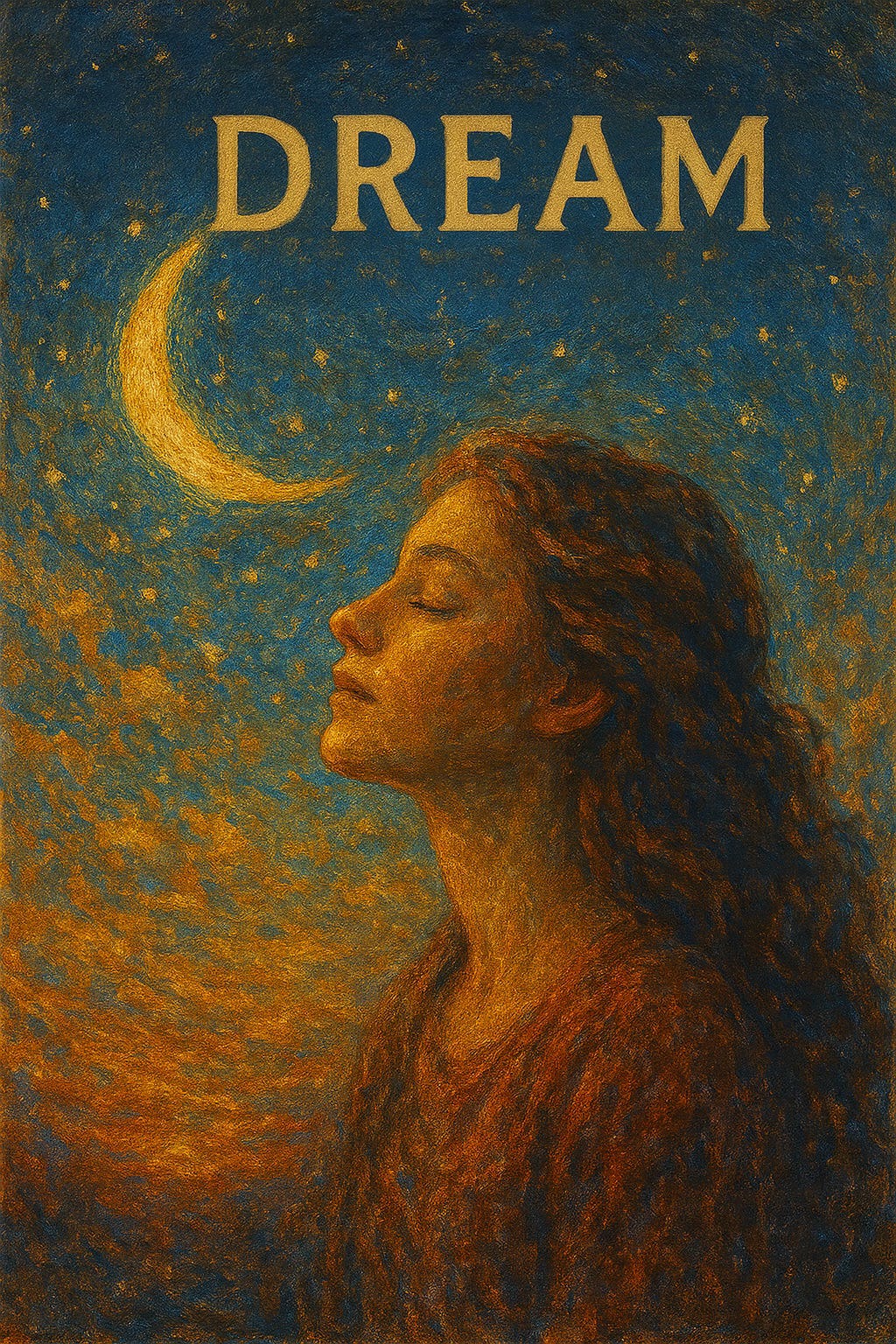
Call it divine order. Call it moral arc. Call it quantum potential or fierce grace. Whatever your framework, trusting that goodness wants to break through is the deep engine of renewal. Faith is not a static belief—it is a muscle we stretch every time we choose vision over fear, compassion over cynicism, and creativity over collapse.
Without some kind of trust—in life, in Source, in one another—we become unmoored. With it, we root down. We rise.
Yes, institutions may crumble. Yes, threats abound. But so do possibilities. The imaginal cells of a new world are already within us. Every action taken in alignment with conscience and creativity matters.
To dream while awake is an act of will. It is a spiritual stance. It is a revolutionary posture in a time of collapse.
You do not need to fix the world alone. But you must tend your flame. You must listen for your unique contribution, and trust that it is enough—especially when rooted in truth, alignment and love.
Do not let despair silence your wisdom. Do not let fear stunt your generosity. Do not let rage fracture your vision. These energies, when tempered with Soul, can become fuel.
This is not the time to check out. It is the time to tune in. To your inner compass. To your sacred anger. To your quiet vision. To your wild hope.
You are needed now.
You always have been.
Practices for Transcendent Engagement
Here are some practices that can ground us in resilience while helping us stay rooted in our depth of Spirit:
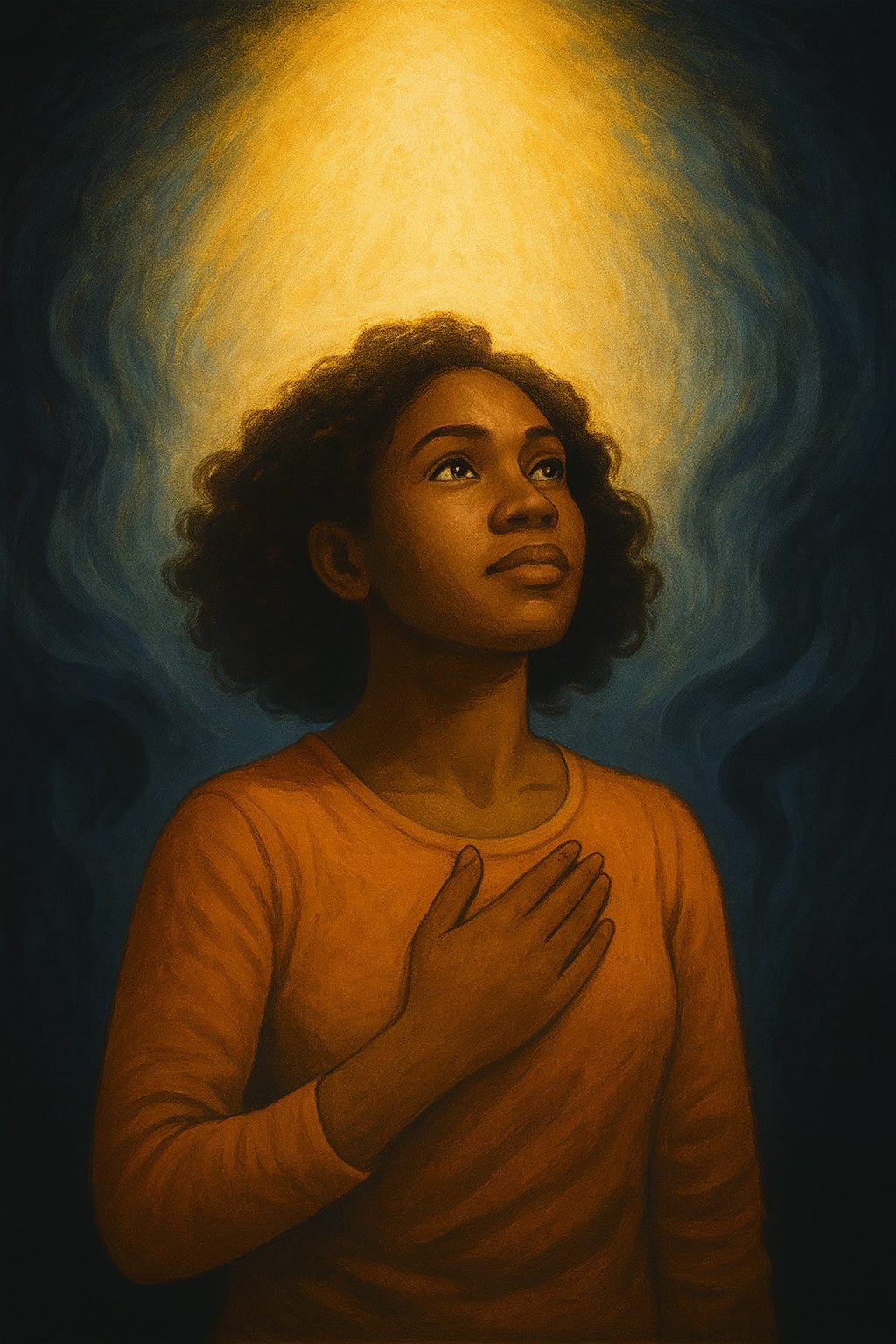
Imagination-as-Resistance: Spend time each day visualizing the world you wish to live in. Not vague hopefulness—specific soulful, imagineering. Imagine how justice feels. How generosity breathes. Picture systems of care, spiritual renewal, leadership rooted in wisdom. Write it down. Speak it aloud. Seed the field with images of cooperation, regeneration, and beauty.
Sacred Filters: Curate your information diet. You wouldn’t drink from a polluted river—so why consume endless streams of doom? Let your nervous system rest. Turn off auto-scroll. Choose depth over drama. Give your psyche room to metabolize what it takes in. Replace compulsive consumption with intentional reflection.
Civic Salons: Gather with others—not just to vent, but to vision. To bear witness. To anchor your hope in community. These spaces aren’t escapes from reality—they’re wombs for what’s next. Find or form a circle that allows for complexity, grace, and the courage to keep imagining forward. More on Civic Salons.
Contribute in your Own Way: Stay present and take small actions that help to ground your faith and trust in a better world. Exhibit kindness, make a contribution, inspire-not dampen, those around you, stay informed from trusted sources and maintain readiness for change with reasonable pragmatism.
Closing Invocation
In the presence of chaos, choose clarity. In the presence of prognostic endings, be a voice for emergence. In the presence of fear, be a keeper of the dream. This is not bypassing. This is birth. This is not escape. This is emergence. This is the way through: alive, awake, and aligned.
Let us imagine fiercely. Let us build tenderly. Let us keep the light, and the fight, alive.
Let us be the ones who remember how to midwife a more beautiful world—while standing in the rubble of the old with open eyes and sacred resolve.
You are not alone. You are not crazy. You are not too late.
You are the medicine.
Let’s Begin.
I’m on this walk with you…
Angelique
I had the thought that I have to speak to myself as I would speak to my grandchildren if they were upset or afraid of a situation. I would not lie about the severity of the situation or make light of their concerns, but I would look for ways to find a positive path and a more optimistic way of addressing the issue.