
Is the Ground Shaking or Is the Sky Opening?
It's Both. Rethinking Work in the Age of AI, Rapid Change and Uncertainty

This post launches a new series on reimagining work in our changing world. Each essay will explore how to navigate uncertainty, uncover your essence, and design a work-life fueled by what makes you, You. This is the first step in that journey.

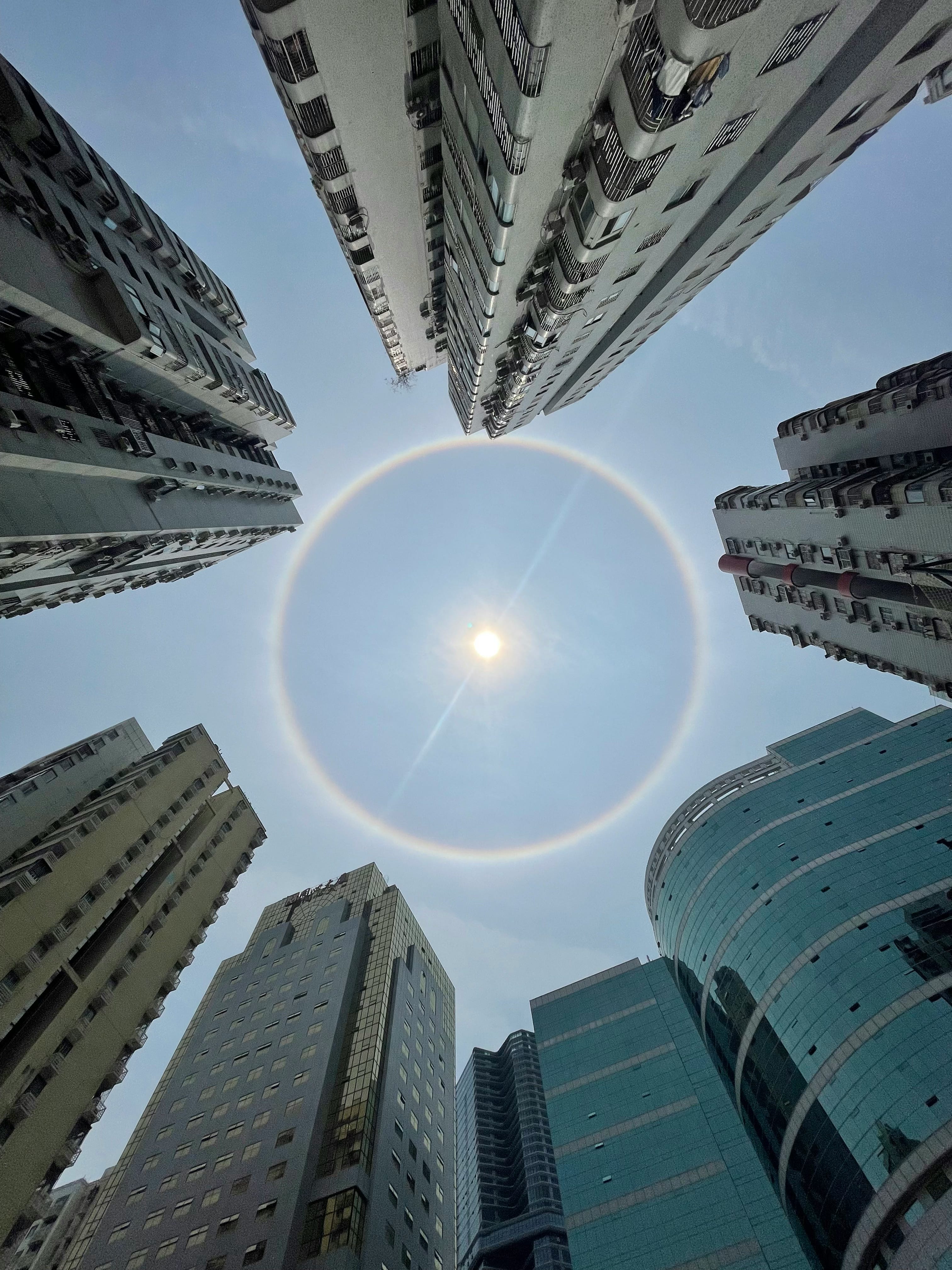
Is the ground shaking beneath us, or is the sky opening above us?
When it comes to work today, it can feel like both. This topic has been on my mind and I look for the break of sun to shine on new ideas and solutions for how we work going forward.
Artificial intelligence, government interventions, and global instability are rewriting the rules of how, why, and even whether we work in familiar ways. For many, it feels destabilizing. The ground beneath the old promises—steady jobs, reliable pensions, predictable career ladders—is giving way.
But look up: a different picture is emerging. New technologies connect us to a worldwide marketplace of ideas, services, and opportunities. Work is no longer confined to one lane, one employer, or even one profession. The sky is opening—if we have the courage to claim it.
The Ground is Shaking
Entire industries are shrinking or being restructured by AI.
Job descriptions are shifting faster than training programs can keep up.
Governments and corporations are asserting more control over how money flows and who gets access.
Reductions-in-force are climbing across both corporate and government environments, cutting into even once-secure positions.
The certainty of “safe” paths is disappearing.
This is not fearmongering—it’s reality. The ground really is shaking.
The Sky is Opening
Yet, as the ground shifts, the horizon expands. Work is no longer a single role or identity; it’s a multi-path ecosystem you get to design.
Today, work can be understood less as a patriarchal employment model—one boss, one paycheck, one location—and more as a series of mutually beneficial commercial connections. A web of exchanges, collaborations, and services across the globe, fueled by technology and connectivity.

This opens the door for flexibility, creativity, and the chance to put your own unique spin on how you contribute. No longer limited to what’s available within commuting distance, you can now reach clients, audiences, and collaborators worldwide. It does demand more self-awareness, self-empowerment, and ingenuity. But the reward is self-sovereignty—the ability to choose how, why, and where you work.
And for those who experience layoffs or forced transitions, the opening can be even clearer. Many people are using job losses as catalysts to reimagine their work entirely—launching consultancies, turning side hustles into thriving ventures, or relocating to places that better fit their values. What begins as a reduction-in-force can become an expansion-in-purpose, when met with creativity and courage.
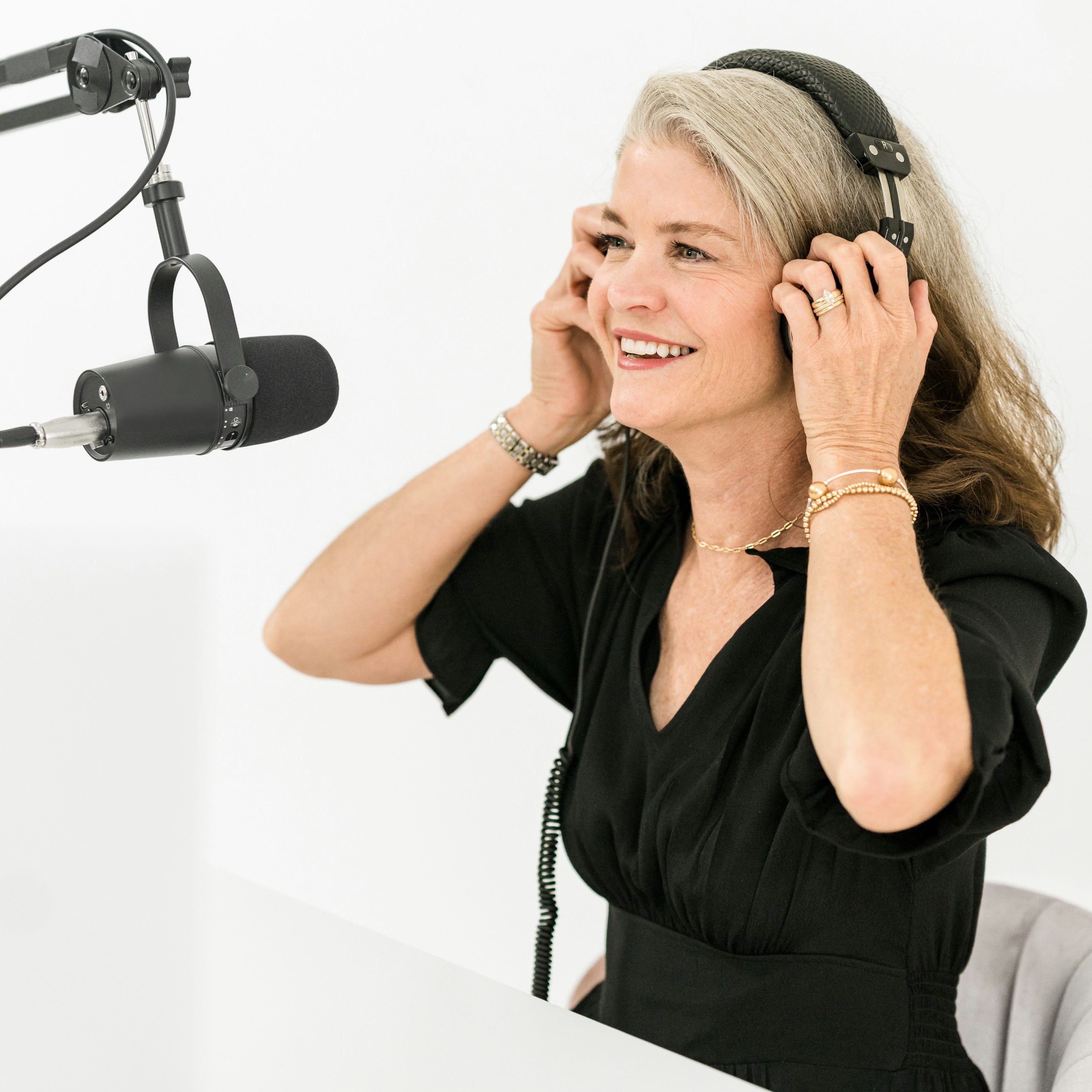
For example, imagine a mid-level marketing manager who loses a job during a merger. What first feels like disaster could become a chance to blend passions: consulting part-time for start-ups, running a YouTube channel teaching design skills, and collaborating with artisans to market handmade products globally. The “loss” then becomes multiple new income streams and a richer sense of purpose.
From One Path to Many
Think of work as a constellation, not a single star:
A lawyer in her late 50s, after being laid off, creates a portfolio life: part-time consulting, teaching online, and building a coaching practice that expresses her wisdom.
A 32-year-old product manager keeps her day job but also runs an Etsy shop, advises on AI ethics, and takes freelance contracts abroad—choosing projects that reflect her curiosity.
A retiree turns decades of storytelling into a podcast, paid speaking engagements, and mentoring younger professionals.
These hypothetical examples illustrate possible ways of meeting change with ingenuity. The internet, digital platforms, and global client bases mean that one person’s work-life can stretch across roles, industries, and borders.
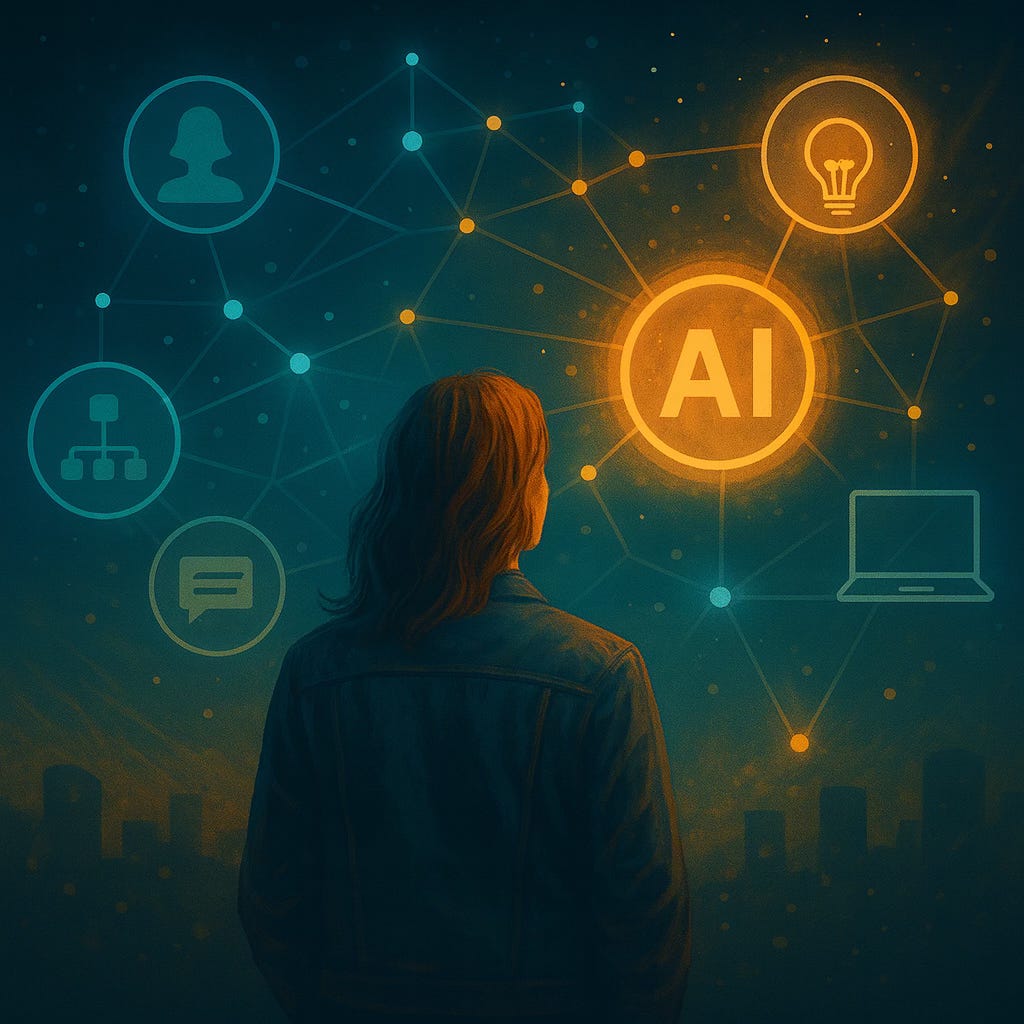
And AI itself is not just dismantling jobs—it is creating new industry roles. Roles like prompt engineers (who craft the questions guiding AI), AI ethicists (who safeguard fairness and values), and conversation designers (who make human-machine interaction more natural) are early signals of an expanding ecosystem. These roles remind us that humans still bring the creativity, ethics, and soul to this frontier.
AI is also enabling would-be solopreneurs and start-ups to enter a more leveled playing field — offering easy to use, inexpensive technology to accelerate entry, marketing, analysis and execution.
Rediscovering Forgotten Work
Interestingly, the future of work isn’t only digital. As technology automates repetitive tasks, many are returning to vocations long abandoned—craftsmanship, artistry, mechanical functions, farming, and design rooted in the human touch. These areas cannot be replicated by AI in the same way, and they satisfy a human hunger for meaning, beauty, and connection.

Woodworking shops, textile cooperatives, local farms, and ceramics studios are resurging. Younger workers are apprenticing with older masters to learn skills that carry both cultural heritage and modern value. A former IT specialist might turn to furniture-making, while a retired engineer could repair home appliances or software-powered vehicles. These “forgotten” vocations are weaving themselves back into the fabric of the new economy, creating livelihoods that mix artistry with practicality.
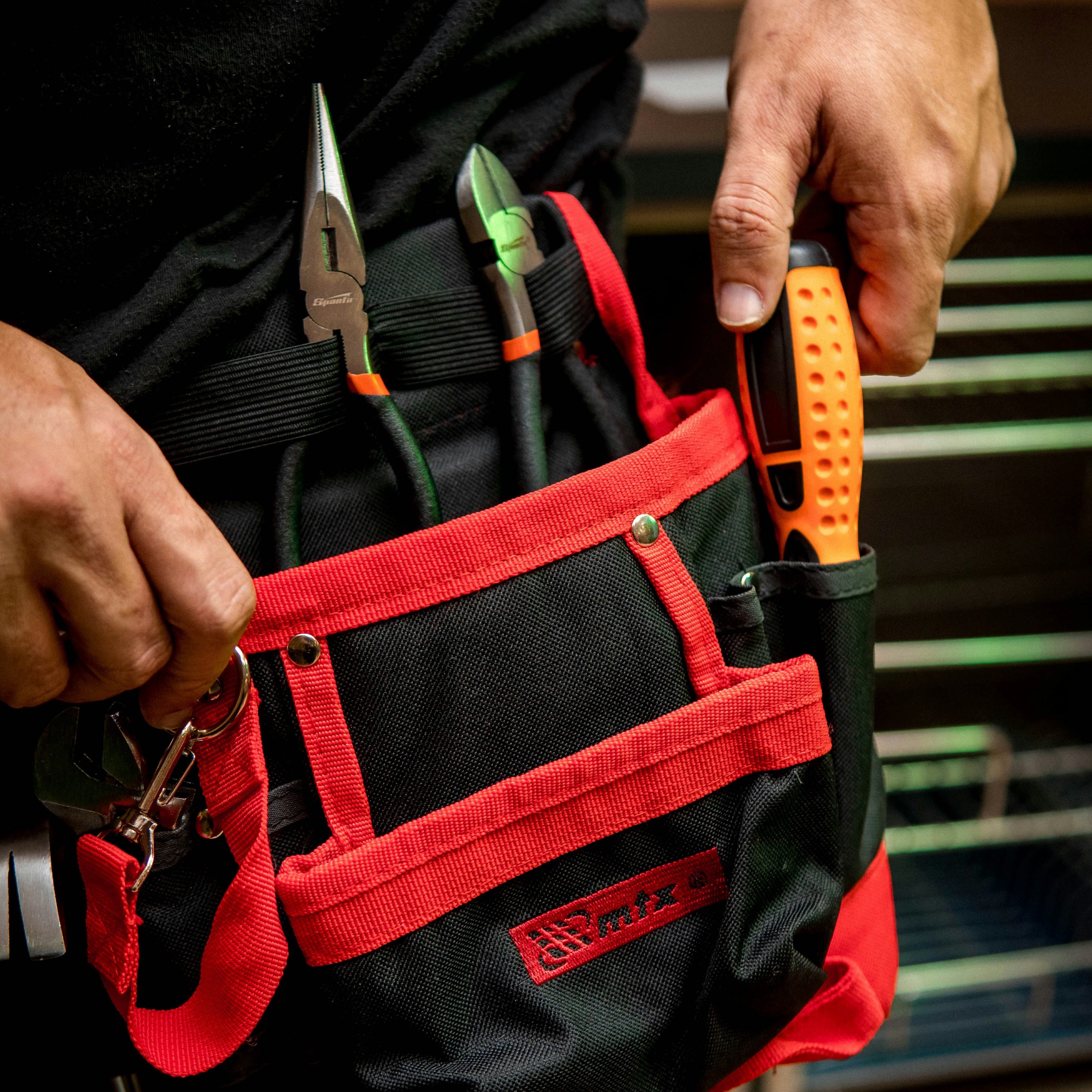
Hands-on trades and essential services are becoming more crucial than ever. Contracting, plumbing, electrical work, welding, and appliance repair are careers that cannot be outsourced to algorithms. They require physical presence, problem-solving, and technical skill—offering steady demand and strong wages in every community. The so-called “Toolbelt Generation” is proving that skilled trades are not fallback options, but front-line careers that power modern life and open doors to entrepreneurship.
At the same time, college-bound young people are facing a sobering reality: the traditional internships and ground-floor corporate opportunities that once launched careers are drying up. Instead of relying on these fading entry points, new pathways are emerging. Vocational programs, entrepreneurial incubators, online skill certifications, and global collaboration platforms are giving students direct ways to test their abilities and build income.
My niece did not go to college. She trained for two years as an aeronautical mechanic. Now only 20, she’s debt-free, earning a significant salary with benefits and has also earned a pilot’s license. Meanwhile, some of her peers are still in classrooms, unsure how to translate their degrees into paying work. Her path may not look traditional, but it gives her freedom, income, and the pride of knowing she’s literally powering her own future.
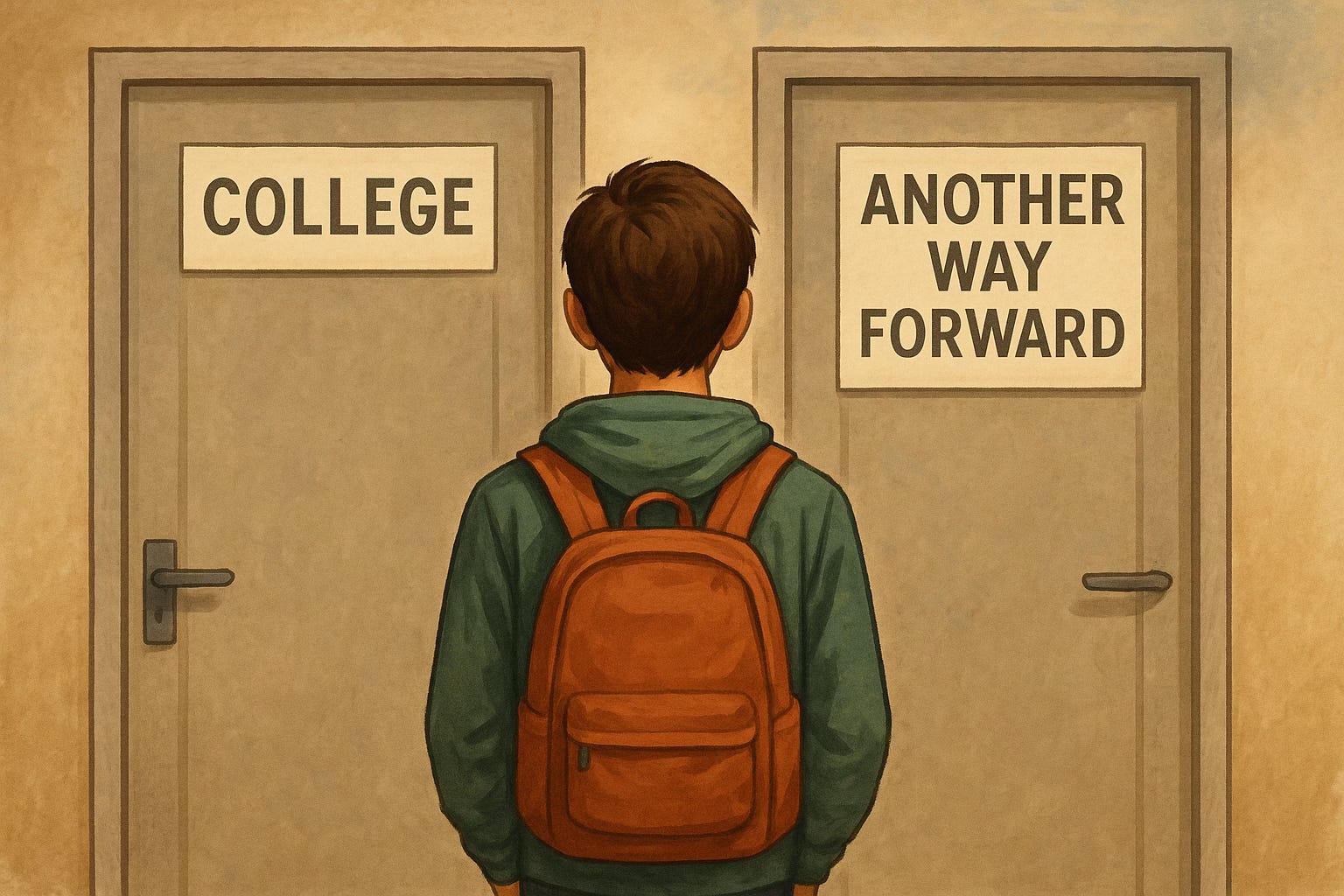
Some are choosing project-based apprenticeships, learning directly from practitioners in fields they admire. Others are creating digital portfolios, freelancing early, or starting small enterprises while still in school. These alternatives encourage initiative, resilience, and creativity—qualities that will serve them long after a first job title would have defined their trajectory.
Baby Boomers and Gen Xers—those moving into new life stages—have opportunities to share experience, know-how, and skills in ways that contribute to society while generating income and deep fulfillment.
The result is a widening field of possibility—work redefined as contribution, exchange, and creativity, not just employment.
Replacing Anxiety with Awareness
The changes happening around us can easily stir anxiety. But anxiety keeps us stuck in resistance. A healthier posture is acceptance—not resignation, but recognition that the world is changing, and so must we. From acceptance, we move into awareness: awareness of ourselves, of our gifts, of our skills, and of the deeper source of energy that fuels us.
That source is what I call meraki—the infusion of soul, creativity, and love into whatever we do. Meraki is not just a poetic flourish; it is the fuel of meaningful work. It is what turns effort into art, labor into contribution, and tasks into expressions of selfhood. In this series, we will be pursuing a Meraki process: waking up to the energy we bring, and learning how to infuse it into the new ways we design our work-lives.
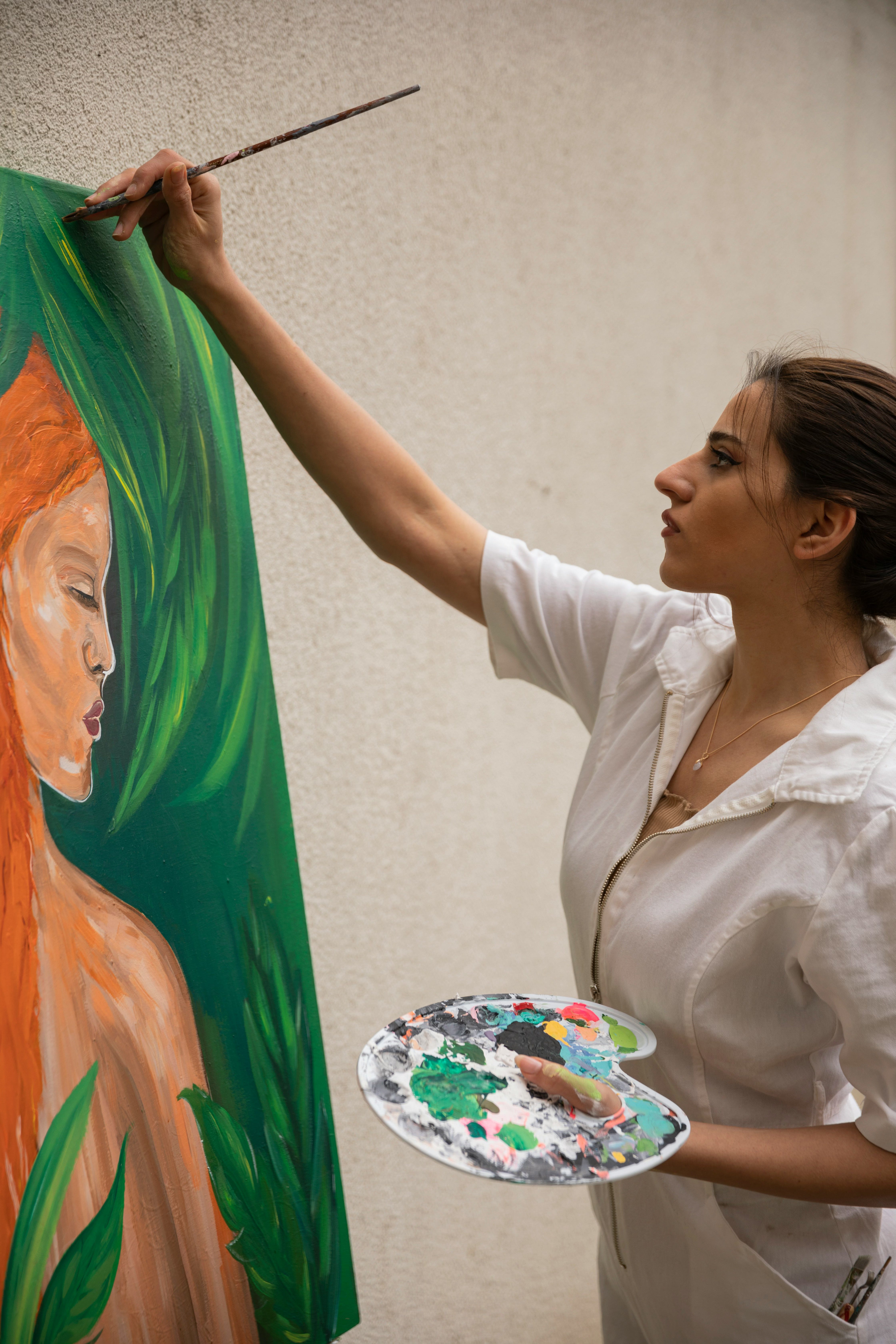
For instance, picture someone overwhelmed by uncertainty who begins a simple daily practice: choosing one task to do with full Meraki—whether preparing a client report or baking bread for family. The shift from anxiety to Meraki-fueled awareness can bring more presence, confidence, and clarity to an entire work-life. However, it has to be tempered with practical pragmatism and the inner confidence of knowing Who You Are.
The Inner Authority Question
The difference between collapse and expansion comes down to one thing: your Inner Authority.
Do you hand the pen to outside forces—letting corporations, governments, or algorithms script your work-life?
Or do you reclaim authorship and design your own?
I call this the "Triple A Empowerment Model:
Agency → the power to act, experiment, and respond with initiative instead of waiting for permission.
Autonomy → the freedom to shape the structures of your work-life (where, how, and with whom you work).
Authority → the confidence and inner compass to make decisions rooted in your essence and values.
And it also means shaking up how we think about risk. For generations, the "safe" choice was to commit to one company or institution for sustenance. Today, that model may in fact be the riskier one. Layoffs, restructurings, and sudden shifts in direction can eliminate even long-standing positions overnight. Relying solely on one employer can expose us to more instability than cultivating our own multi-path work-life. By contrast, relying on yourself—and collaborating with trusted partners, clients, and employees—can be the more reliable path to long-term abundance.
Imagine, for example, someone who has spent twenty years in government service, realizing their role could vanish with a single budget cut. By exercising Self-Agency, they might begin developing a consultancy on the side. With Autonomy, they could structure their schedule to blend part-time policy work with freelance projects. And with Authority, they could make courageous decisions aligned with values of justice and impact. In this way, they create multiple income streams and greater security—because their work is rooted in their own design.
Without Inner Authority, you’re at the mercy of systems you don’t control. With it, you become the designer of a work-life that cannot be automated or diminished, because it’s rooted in who you are—and energized by Meraki.
A Bigger World, A Bigger You
In this new era, the sky truly is the limit. But to step into it requires a willingness to:
Grow confidence in your abilities and instincts
Experiment and push your envelope
Expand your mind beyond the small percentage we typically use
Develop flexibility and mobility, so you can live and work anywhere
Cultivate self-sufficiency, building multiple income streams over time

The good news? You don’t have to walk this alone. Innovators and brave souls are already out there—teaching, modeling, and sharing their experiments. Creating new work can be collaborative, inspiring, and community-based.
The Work Ahead: Self-Awareness
This series will begin with the foundation: self-awareness. Before we can design sovereign work-lives, we must know who we are in essence, what we love, how we impact others, and what we bring to the game of life.
It’s from this inner knowing that confidence grows, ingenuity sparks, and contribution finds its right expression. And yes, you can be compensated for that—because the world needs it.
In the coming weeks, I’ll introduce a way to uncover your own “work blueprint”—a compass that reveals the unique pattern of contribution, creativity, and essence you were born with. A framework for designing not just a career, but an individulized sovereign work-life that carries meaning, adaptability, and creative power.
Because when the ground shakes, you don’t just cling harder to the past. You look up, steady yourself, and step into the sky—fueled by the Meraki only you can bring.
Reflection Prompt for Readers
Where in your current work-life do you feel the ground shaking—and where do you sense the sky opening?
How might acceptance, awareness, and Meraki transform the way you approach those changes?
How might rethinking risk—seeing reliance on a single employer as less secure than designing multiple paths—shift the way you view your own work-life choices?
And where in your current work-life do you already express Self-Agency, Autonomy, or Authority—and where might you strengthen them?
Thought provoking, as always. Times of great change can always lead to anxiety but finding new ways to approach those changes is how some people thrive.